This issue’s core theme is lifestyle. The two books I’m recommending both have wildly polarized reviews, whether on Douban or WeChat Reading. But after finishing them, they genuinely gave me things to think about regarding how I want to live.
As Buffett put it: the ideal state is simply a person’s character matching their lifestyle. Finding your own way of living beats “passively” adopting a lifestyle handed to you by social media — if only because it’s the one you actually chose.
Both Ohara Henri and Cait Flanders deliberately chose their own way of living — one through seclusion, the other through a shopping ban, one niche and one more mainstream — and both, through that choice, arrived at a version of happiness that fit them specifically.
I’ll quote from the comments sections to cross-illuminate what struck me about each book, and why I hope more people read them.
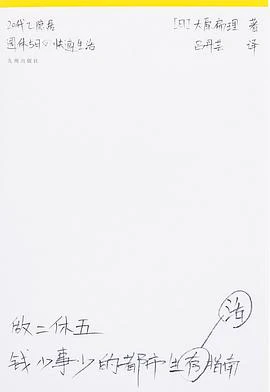
Two Days a Week, Five to Live: An Urban Life with Less Money and Less Hustle
Just offering up a possibility, against the weight of such powerful social inertia, is already pretty cool.
— [Deactivated user]
The content of the book stopped mattering at some point — what it shows is an entirely different possibility for living.
— Haruka
The author retreats fully into the shelter of his own private life, taking soft individualism to its furthest extreme, and out of that writes this ultimate manual for becoming a glorious do-nothing. The prose is even more downbeat than Yataro Matsuura’s — bleak all the way to the bottom. And yet the brightest fireworks always bloom against the darkest sky: behind this wry, slyly unconventional writing lies the author’s genuinely deep despair and a thoroughgoing reckoning with pain. Withdrawing from society, deliberately severing unnecessary social ties, maintaining the maximum possible distance from it, treating your own comfort and happiness as the first priority — at its core, this is a kind of Gandhian nonviolent non-cooperation, a quiet resistance against the hidden, coercive violence of social conformity. The author is, without question, a genuine warrior of everyday life.
— holly2007
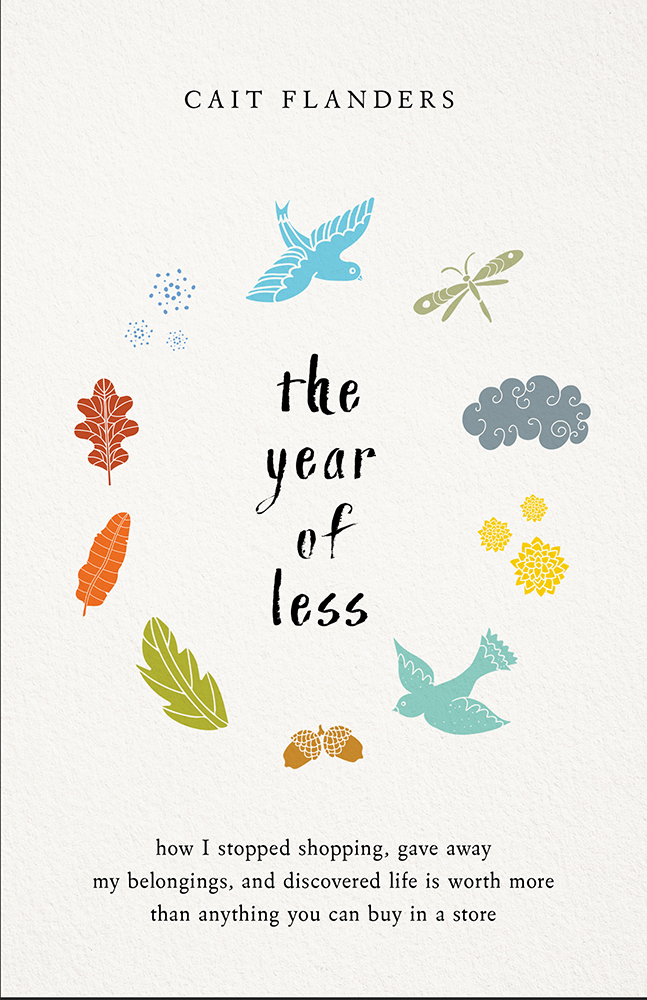
The Year of Less
The author is someone who has genuinely struggled with addiction in her life. Rather than simply recording a year of not spending, the book is really trying to show readers what she gained from that single constraint — set against the backdrop of upheavals in her friendships, romantic life, and family. Why she became addicted, and how she fought her way out of it. As someone who doesn’t drink or smoke but can’t control my spending, a lot of her interior journey felt strikingly familiar. I think the author is remarkably sincere — dissecting her own past habits and life to this degree, and then publishing it, takes real courage.
— 樂園
Through a “spending ban,” the author lives a deliberately examined life — and in that examination, works out: what do I actually want right now? What do I want to get out of this one life? What mark do I want to leave on the world, and why? Along the way, she finds a way of living that fits her own values and goals, and finds inner peace. “Simplify, strip away, figure out what’s actually going on.” Of course, what she’s really figuring out is “what’s actually going on with myself.”
— Silent Johannes
A shopaholic, as the book points out, usually conjures the image of a woman in heels carrying a pile of shopping bags. Like an eating disorder, it’s tied up with expectation — who you expect to become, what body you expect to have, what clothes you expect to wear. Not shopping is partly about releasing your grip on that expectation, and paying more attention to how you actually feel: what do I need? What makes me feel comfortable? And it’s partly about fighting expectation with expectation — I expect to become someone clearer-headed, more organized, someone more aligned with my own values — and letting that expectation outweigh the other one: looking polished and put-together in everyone else’s eyes.
— Little Fish Cracker